5 signs your sump pump is about to fail
Pumps rarely die silently. If you know what to listen and look for, you usually have weeks — not hours — to act.

Ryan Kennedy
April 18, 2026
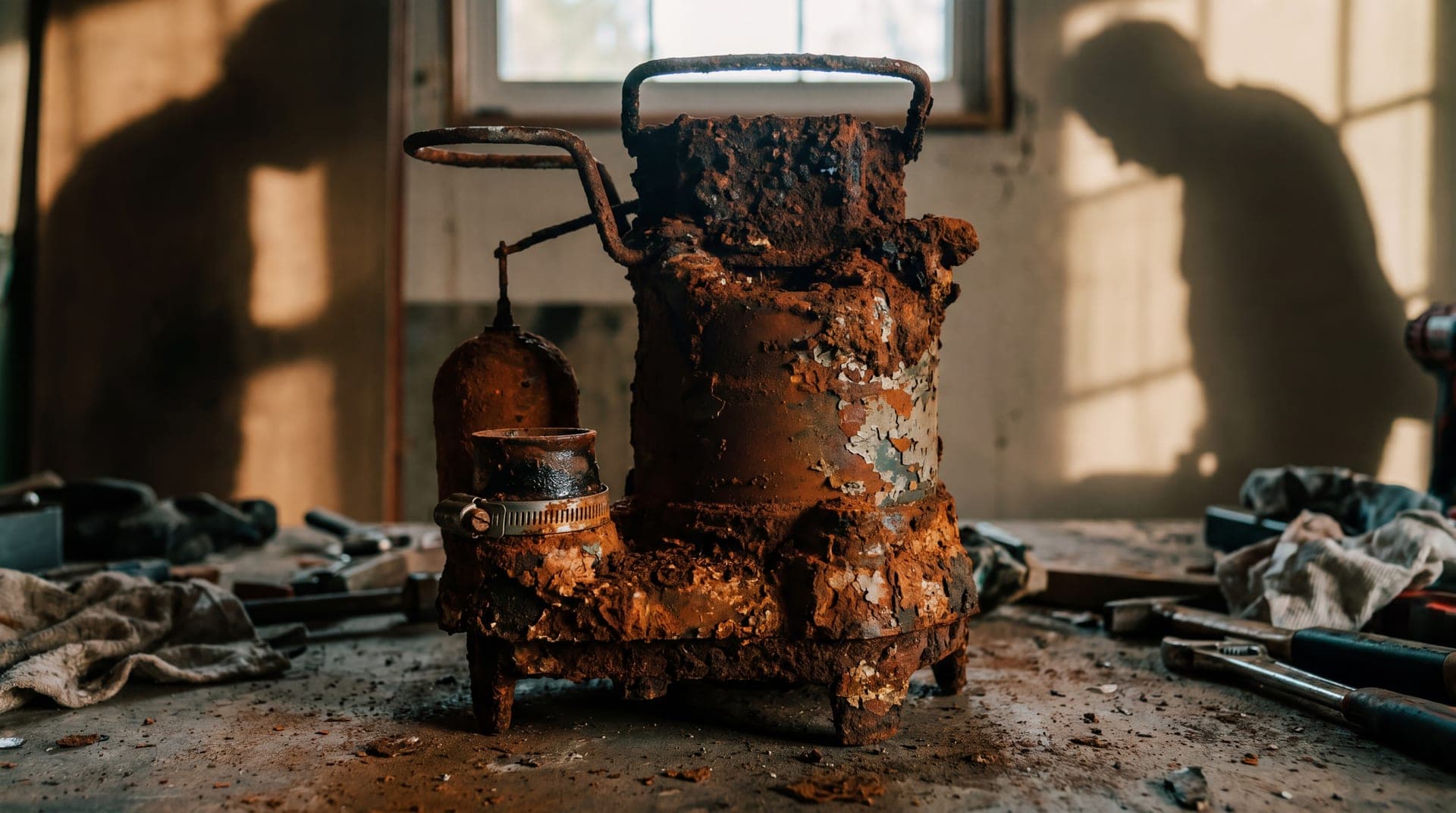
Almost every failed pump I've pulled out of a basement was telling the homeowner something was wrong for weeks before it actually died. The problem is that most people don't know which sounds and behaviors are normal and which aren't.
Here are the five signals that actually matter. If you notice more than one of them, treat the pump as borderline — don't wait for the next storm to find out.
1. Sounds that don't belong
A healthy pump makes a consistent, muffled hum during a cycle and a clean mechanical click when it starts and stops. Anything else deserves a look:
- Grinding or rattling. Usually debris caught in the impeller, or the impeller itself wearing. Either way, it's pulling more current than it should.
- Gurgling during or after a cycle. Air in the discharge line. Often a sign the check valve has failed and water is running back down into the basin.
- Humming with no pumping. The motor is trying to run but the float is stuck, the impeller is jammed, or the start capacitor is dying. Never leave this one overnight — a stalled motor will burn itself out fast.
2. The pump runs constantly
Short cycles every minute or two, over and over, during a dry week. Possibilities:
- The check valve has failed and water is recirculating.
- Groundwater is genuinely that high (check the neighbors — if everyone's pumping, it's the water table, not your pump).
- The float is set too low and the pump is chasing its own tail.
Constant cycling is the fastest way to kill a motor. If it's been doing it for a week, the clock is ticking.
3. The pump doesn't run during a storm
The opposite failure, and the more dangerous one. If heavy rain comes through and you don't hear the pump kick on, two things might be happening:
- The float is stuck down (usually tangled on the basin wall or wedged against the power cord).
- The pump has already seized, and you only notice when you needed it.
An easy at-home test: slowly pour a five-gallon bucket of water into the basin on a dry day. The pump should cycle on within seconds and push the water out. If it doesn't, you've caught a failure before it costs you a basement.
4. Visible rust, corrosion, or discolored water
Lift the basin lid. The outside of the pump housing should look clean. What to watch for:
- Orange rust streaks down the pump body. The cast iron is degrading. Once corrosion starts from the outside, it's already progressing from the inside.
- Calcium scale on the discharge pipe. Not a failure by itself, but a sign the system is moving hard water — which accelerates impeller wear.
- Discolored water in the basin (oily sheen, rust-red tint). The motor seals are compromised. This pump is on borrowed time.
5. The battery backup is quietly dead
This one's the silent killer. The backup isn't there for normal cycling — it's there for the night the power goes out during a storm and the primary pump can't run. If the battery is old, the charger is disconnected, or the alarm is disabled, you won't find out until the worst possible moment.
Open the backup. The battery should be within its date range (usually stamped on top, 3–5 years from manufacture) and the indicator light should be solid green. Press the test button; it should cycle the backup pump audibly. If any of that fails, replace the battery this month — not next year.
What to do if you see any of these
The mistake I see most often is homeowners noticing one of these signs, hoping it works itself out, and then calling in a panic during the next storm. At that point the options are limited and expensive.
When you catch a warning early, a single-visit fix can often extend the system by years. That's what K-Guard maintenance is for — and it's why I'd rather look at your pump when nothing is urgent than race you to it at 2 AM.
Book a visit if anything on this list looks familiar. If you're not sure, that's also a fine reason to book.

Written by
Ryan Kennedy
Sump pump specialist serving Central Ohio. Hundreds of installs, one focus.