How long does a sump pump actually last?
The industry says 7 to 10 years, but that range hides more than it reveals. Here's what actually determines a pump's lifespan in a Columbus basement.

Ryan Kennedy
April 18, 2026
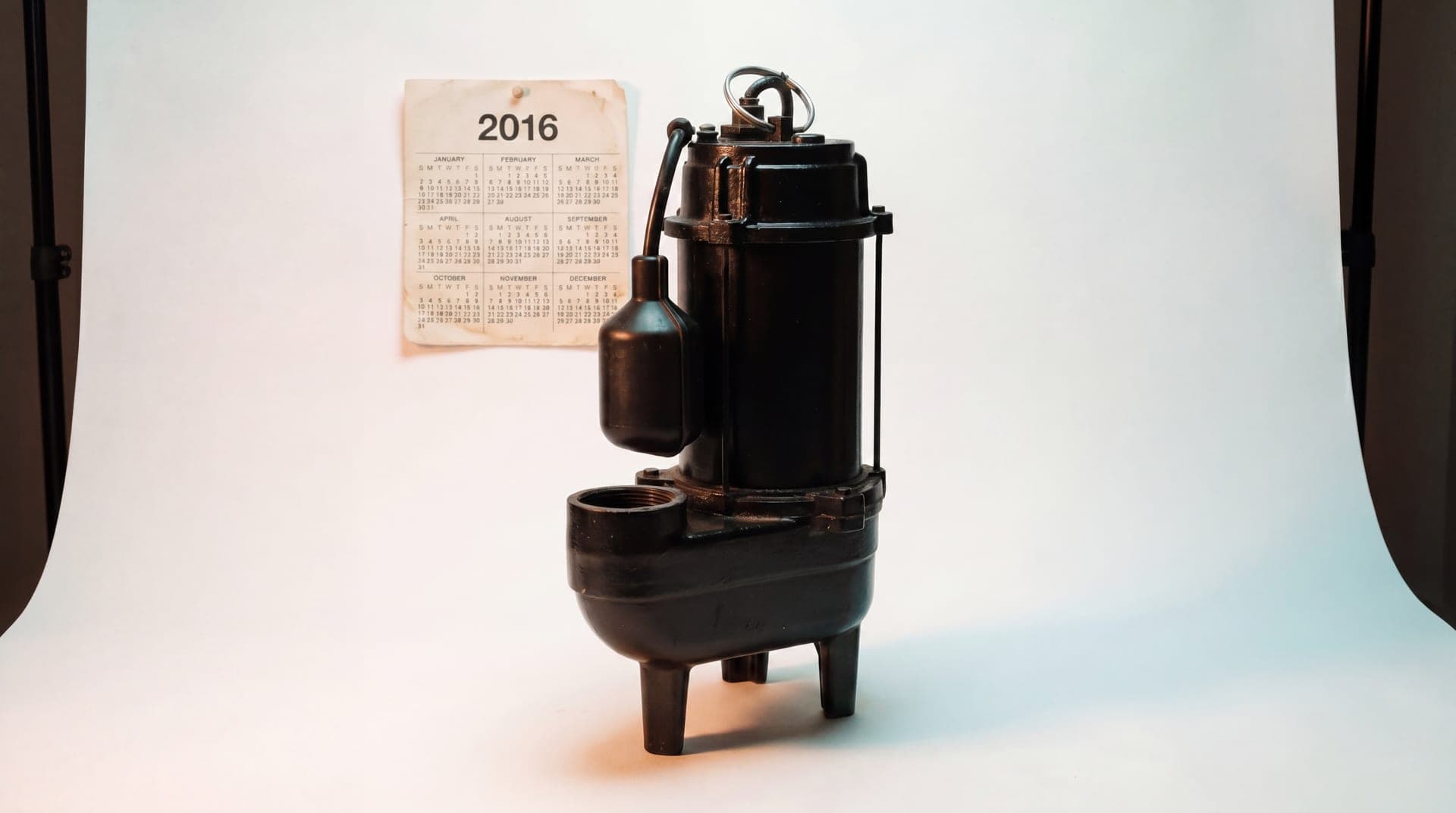
The short answer most people give is "seven to ten years." It's not wrong — it's just incomplete. Two identical pumps installed in two identical basements a mile apart in Clintonville can finish the decade in very different shape. One is quiet, rust-free, and still has years left. The other is seizing up in year six.
What makes the difference isn't the pump. It's the work the pump is asked to do.
Duty cycle matters more than the calendar
A sump pump doesn't wear out from sitting there. It wears out from running. Every start spins the motor, cycles the float, wears the impeller, and cycles the capacitor. A pump that runs three times an hour in March is working dramatically harder than one that runs three times a day.
Most Columbus homes sit somewhere in the middle. But a handful of local factors push certain houses toward the high-duty end of that range:
- Clay soil. Central Ohio's clay doesn't drain — it holds. When the soil around your foundation saturates, groundwater has nowhere to go but into the perimeter drain and your pit. A house surrounded by heavy clay can run its pump five times as often as a house on gravelly soil two blocks away.
- Lot grading. Negative grade (where the ground slopes toward the house) sends surface water straight to the foundation. In older neighborhoods like Grandview and Clintonville, decades of settling have quietly turned well-graded lots into bad ones.
- Blueprint Columbus sewer separation. In the neighborhoods where the work has already happened, sump pumps do more work than they used to — storm water that used to disappear into the old combined sewer now has to be handled locally.
What actually fails, in the order it usually fails
After a few hundred teardowns, the failures cluster in a predictable way:
- Check valve first. Cheap plastic check valves on mid-grade installs fail long before anything else. When they do, water runs back into the pit on every cycle — and the pump works twice as hard pushing the same water up twice.
- Float switch second. Tethered floats get caught on the basin wall. Vertical floats wear their rubber seal. Either way, the pump either never shuts off or never starts.
- Impeller third. Sediment in the water grinds the impeller vanes over time. A pump with a worn impeller can still run, but it moves less water per cycle — so it runs longer to clear the same pit. That drives the motor harder, which brings us to the last failure.
- Motor last. When the capacitor goes or the windings burn out, the pump is done. By this point, everything upstream has usually been failing for a while.
What makes a pump actually last
You can't change the clay. You can change the things that sit around the pump:
- Put a real check valve on it. A brass Zoeller check valve costs a little more than the plastic spring-loaded kind. It outlasts three of them.
- Size the basin honestly. A basin that's too small cycles the pump every couple of minutes during a storm. A bigger basin lets the pump rest between cycles and triples its duty-cycle life.
- Keep sediment out. A basin liner with a proper inlet grate keeps grit out of the water before it reaches the impeller.
- Protect the discharge line. A discharge that freezes in February will back water up into the basin and ice will crack the pipe. An ice guard on the exterior terminus solves both problems.
- Back it up. A battery backup doesn't extend the primary pump's life — but it extends your margin of error when the primary finally does quit. Which it will.
The real answer
An honestly-installed, honestly-maintained sump pump in a Columbus basement lasts about eight years. Some last twelve. Some die in five.
If yours is past six and you haven't had it looked at, that's the moment. Not because it's about to die — but because the small stuff (a failing check valve, a float starting to stick) is cheap to fix when the pump is still healthy and expensive when it isn't.
Roughly half the K-Guard visits we run catch something that would have failed inside a year. Book a visit and we'll tell you honestly whether yours has life left.

Written by
Ryan Kennedy
Sump pump specialist serving Central Ohio. Hundreds of installs, one focus.