Why Columbus basements flood
It's not bad luck. It's clay, water tables, aging infrastructure, and grading — and the fixes are specific to each of them.

Ryan Kennedy
April 18, 2026
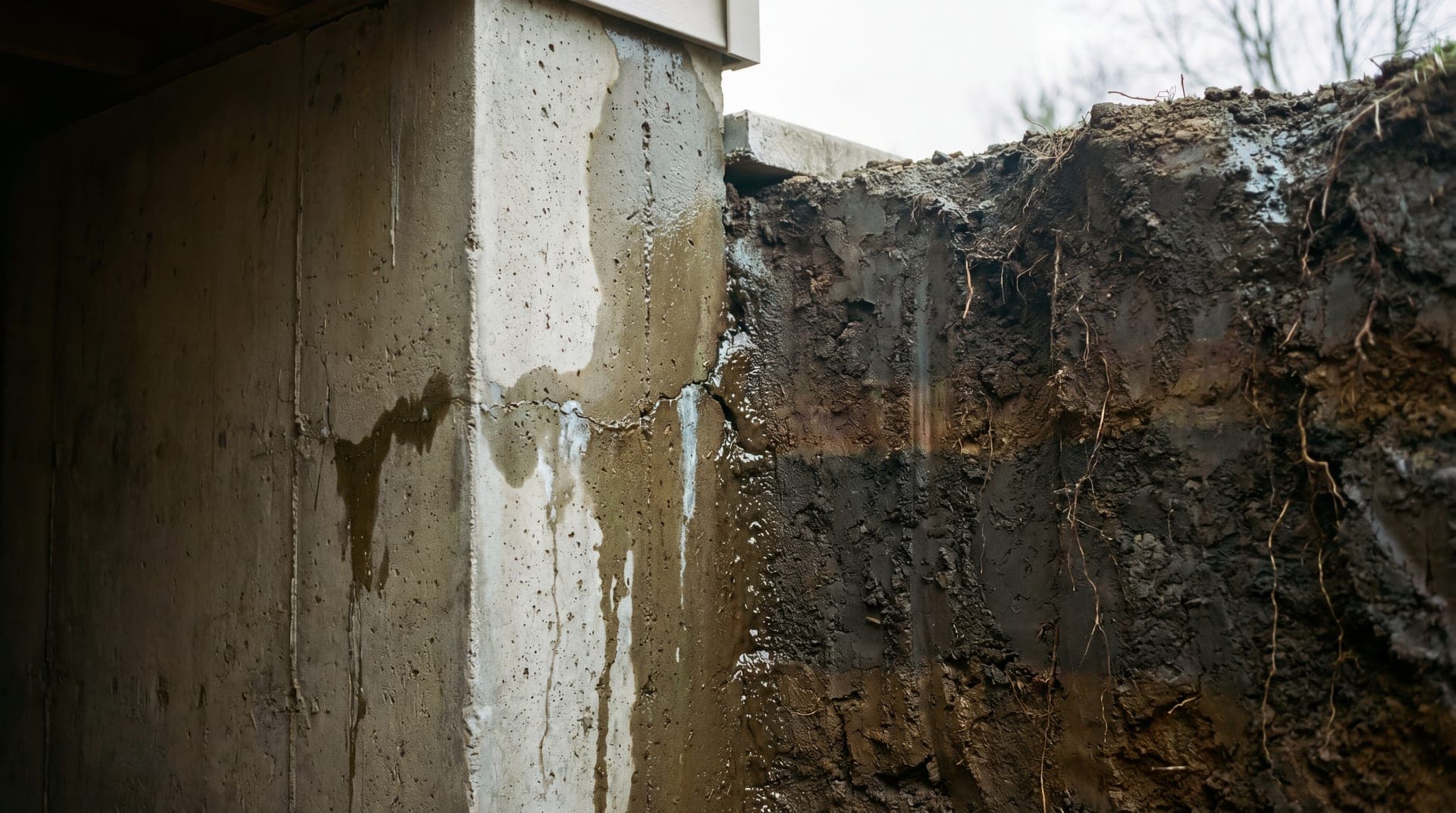
Every spring, we get the same call: "It never used to do this." A storm rolls through, water shows up in the basement, and the homeowner can't figure out why a house that was dry for twenty years is suddenly not.
There are five reasons Central Ohio basements flood. Most of the houses we see have at least two of them working at the same time. Knowing which ones apply to you decides what to actually do about it.
1. Clay soil that doesn't drain
The soil under most of Columbus is heavy clay — low permeability, high water retention. In sandier parts of the country, rain soaks into the ground. Here, it sits. During a three-day storm, the clay around your foundation saturates like a wet sponge and pushes groundwater directly against your foundation walls.
This is the foundation-water problem. The fix is interior drainage — a perimeter drain in the basement floor that collects hydrostatic pressure before it seeps through the walls, and a properly-sized sump pump that moves it outside.
Clay doesn't change. Grading and drainage are the only variables.
2. Water tables that move
Central Ohio's groundwater table rises and falls three to six feet through the year. In a wet spring, the water table can reach the level of your basement floor — meaning water is trying to come in from underneath, not just from the sides.
If your house was built on a low-lying lot or your basement floor is deeper than the neighbors', you're fighting a higher water table than they are. Same house, same storm, different outcome.
The fix is usually a larger-capacity pump and a backup pump, not a different strategy.
3. Storms that are heavier than they used to be
NOAA's Atlas 14 data for Ohio shows what most old-timers already know: the storms that hit Columbus today are measurably heavier than they were a generation ago. The 10-year storm event (the kind that statistically happens once a decade) now happens roughly every five years.
Systems sized for 2005 rainfall aren't sized for 2025 rainfall. A pump that handled every storm reliably for fifteen years might simply be outmatched by the new reality — not broken, just undersized.
Upsizing the pump and basin is straightforward. The harder question is whether the discharge line and the exterior drainage around the house can handle the water the pump is moving.
4. Blueprint Columbus and the old combined sewers
In older neighborhoods — Clintonville, Grandview, Beechwold, University District — the municipal sewer originally carried both storm water and sanitary sewage in one pipe. During big storms, that combined sewer occasionally backed up. The backup didn't just go back into the street; it went into the lowest drains in the system. Basement floor drains. Laundry tubs. Toilets.
Blueprint Columbus is the city's multi-decade project to separate these sewers. In neighborhoods where it's already done, the problem is solved. In neighborhoods where it's pending, a backflow preventer on the sewer line is the right answer — separate from the sump pump entirely.
If you've ever had dirty water come up through a basement drain (as opposed to seeping in from the walls), that's a sewer backup, not a groundwater problem. Different failure, different fix.
5. Grading that's drifted
Most of the houses we see were built between 1950 and 1990. They were graded correctly when new. Forty years of landscaping, lawn top-dressing, settled soil, and added hardscape have quietly turned well-draining lots into flat ones. In some cases, the grade near the foundation now slopes toward the house — meaning every roof's worth of rainwater ends up against the foundation wall.
The fix is part landscape, part plumbing:
- Re-grade the first 10 feet around the foundation to slope 6 inches down.
- Extend downspouts at least 8 feet from the house.
- Install exterior French drains where surface water collects and can't be re-graded away.
This is usually the cheapest category of fix and the one with the most leverage. Moving water before it gets to the foundation is always easier than moving water after it's inside.
So what do you actually do?
Every basement is some combination of these five. The walking-around honest answer is this:
- If water comes through the walls or at the wall-floor joint: foundation water. Interior drainage + sump pump.
- If water pools near the house during storms: surface water. Grading + exterior drainage.
- If water comes up through floor drains: sewer backup. Backflow preventer.
- If your pump runs nonstop during storms but the basement stays dry: system is sized correctly but working hard. Consider upgrading capacity and adding a backup.
- If the pump doesn't run when it should: service or replace it. This is the cheap fix that prevents all of the above.
Most basements need two or three of these, not all five. The hard part is figuring out which ones — which is what the free assessment is for. Book one and we'll walk through it with you.

Written by
Ryan Kennedy
Sump pump specialist serving Central Ohio. Hundreds of installs, one focus.